How to Style a Nursery with Decorative Pillows
Table of Contents
- Start With a Colour Scheme for Your Nursery
- Choosing Nursery Pillow Ideas by Shape and Size
- Mixing Patterns in Nursery Decor Without Overwhelming the Room
- Placing Pillows in the Nursery Chair, Reading Corner and Cot Area
- Safety-First Styling: Keeping Pillows Out of the Cot
- How to Coordinate Nursery Accessories With Your Pillows
- Booking Your Nursery Styling Next Steps With JÈYS & I
- Frequently Asked Questions
Last Updated: November 1, 2026
Start With a Colour Scheme for Your Nursery
Choosing a colour scheme is the first decision that shapes how every pillow will look, and it is the starting point for anyone learning how to style a nursery with decorative pillows. Most parents start with two or three soft tones and build outward from there. A calm palette makes it easier to add texture and pattern later without the room feeling busy.
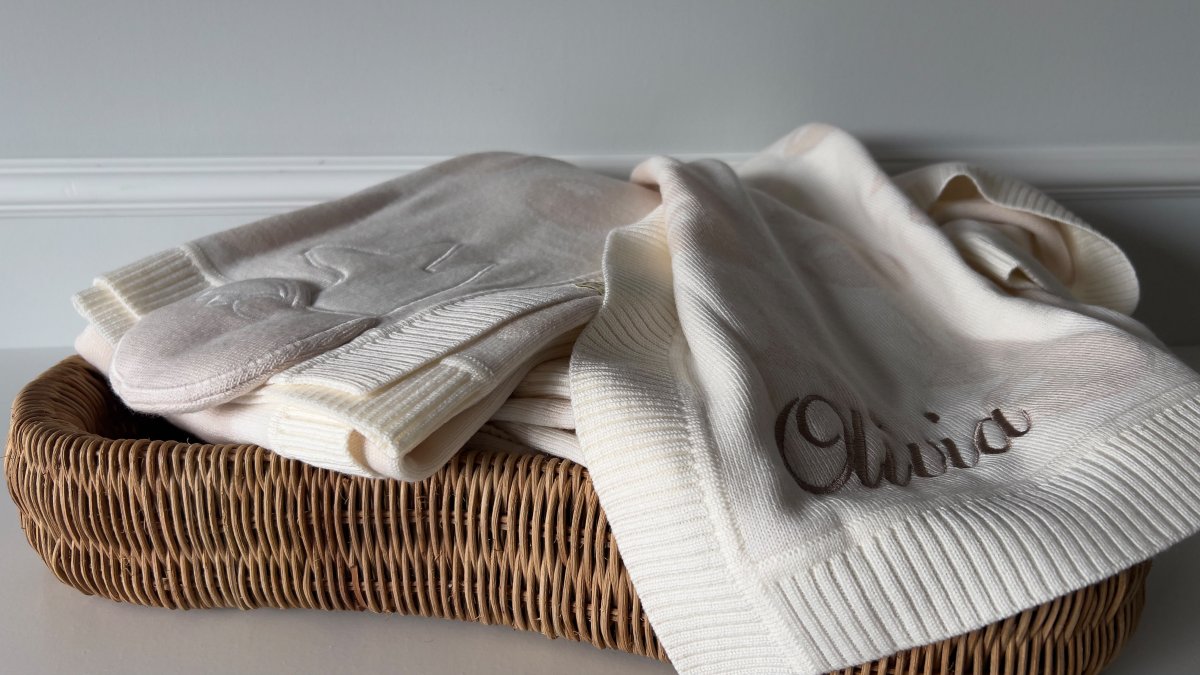
Neutral shades such as oatmeal, stone, sage and blush work well with most décor. They suit both boys' and girls' rooms and tend to age gracefully as your child grows. Bolder accents can then be introduced through a single cushion or a small rug.
- Pick one main colour that covers about 60 per cent of the room
- Choose a secondary shade for furniture and soft furnishings
- Add one accent colour through pillows, prints or a lamp
- Test fabric swatches in daylight before buying
Parents looking for timeless neutral options can explore Timeless Nursery Decor Style Ideas for palettes that won't date quickly. For a deeper look at using calm tones, read neutral nursery colour palettes. If you are deciding between comfort-led and style-led gifts that match your palette, Distinctive Baby Gifts: Comfort vs Nursery Style compares both approaches.
Choosing Nursery Pillow Ideas by Shape and Size
Pillow shape changes how a nursery feels, so it is worth considering early when you plan how to style a nursery with decorative pillows. Square cushions suit a chair or cot corner, while lumbar shapes work well along a window seat. Round cushions add softness and break up straight lines in the room.
Size matters as much as shape. A 45 cm cushion looks balanced on a standard armchair, whereas a 30 cm cushion suits a smaller reading nook. Oversized pillows can overwhelm a compact space, so measure first.
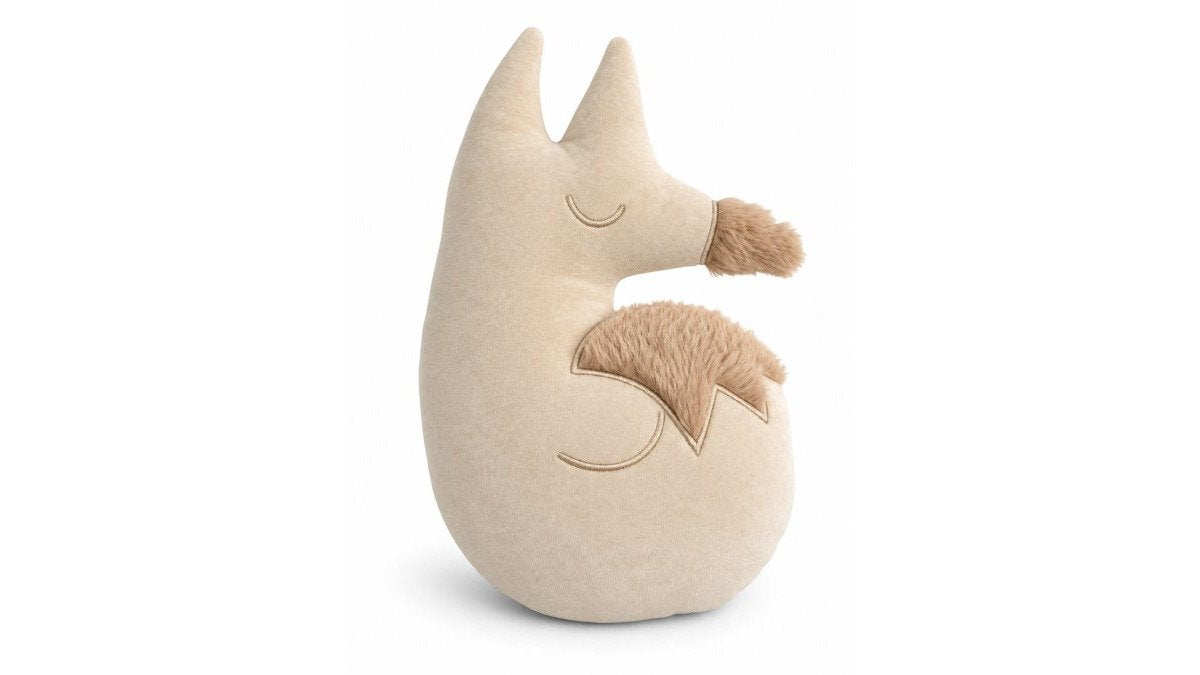
A decorative fox pillow is a good example of a playful shape that works with neutral décor. You can browse the full range of signature pillows to find shapes and tones that match your accessories. Its sculptural form gives the room a focal point while suiting a neutral palette. You can see the Signature Fox Decorative Pillow and check how it fits a chair or cot corner.

Mixing Patterns in Nursery Decor Without Overwhelming the Room
Pattern adds interest, but too many prints can make a nursery feel cluttered. A simple rule helps: combine no more than three patterns, and vary their scale. Pair one large print with one small print and a solid texture.
Keep the colours within your chosen palette so the patterns feel connected. Stripes, dots and florals in the same tones read as calm rather than busy. Solid knitted or linen cushions help balance everything else.
- Use one large-scale pattern as the focal point
- Repeat one colour from the pattern across the room
- Add a textured solid, such as bouclé or cotton waffle, to rest the eye
Placing Pillows in the Nursery Chair, Reading Corner and Cot Area
Placement determines whether pillows look styled or simply scattered, but it also affects how comfortable you are during long feeds and settling sessions. Most nursery styling guides focus only on how a chair looks. A more useful approach is to think about how each cushion supports you as a parent, then style around that.
The nursing or feeding chair. A lumbar cushion placed at the small of your back can make feeds more comfortable, and a smaller cushion tucked under the elbow on your feeding side can help support your arm. Keep the armrests clear enough that you can move freely, and choose covers that are easy to wipe or wash, since feeds are rarely tidy.
The reading corner. A floor cushion or a large square cushion against the wall gives a comfortable backrest for story time. Layer a firmer cushion behind a softer one so you can adjust the angle. A 45 cm cushion works well against a wall, while a 30 cm cushion is better for a small child to lean against as they grow. Keep a low basket nearby so cushions can be tidied away quickly.
The window seat. A long lumbar cushion along the back of a window seat adds comfort and colour without crowding the space. Choose a cover in a fabric that won't fade quickly in daylight, and rotate the cushion regularly so one side doesn't take all the sun.
Near the cot. Keep decorative pillows well out of reach and away from the sleeping area. Decorative items belong on a chair, shelf or window seat, not inside the cot. A shelf above adult shoulder height is a good home for anything you remove at bedtime.
A simple rule of thumb: place cushions where an adult sits or leans, not where a baby sleeps. That keeps the room looking considered while keeping the sleep space clear.
The table below sets out where each type of cushion sits and the main thing to remember when placing it.
| Location | Cushion to use | Key point |
|---|---|---|
| Nursing or feeding chair | Lumbar cushion at the small of the back | Keep armrests clear and covers easy to wipe |
| Reading corner | 45 cm cushion against the wall | Layer a firmer cushion behind a softer one |
| Reading corner (older child) | 30 cm cushion | Suits a small child leaning as they grow |
| Window seat | Long lumbar cushion | Rotate regularly so sun fading is even |
| Near the cot | None | Keep decorative pillows well out of reach |
Safety-First Styling: Keeping Pillows Out of the Cot
Pillows and soft décor should stay outside the cot at all times (Help for early years providers : Safer sleep). Loose cushions, bumpers, toys and folded blankets can create a risk for babies, so it is best to keep the sleep area clear. The safest approach is to keep the cot itself completely clear: a firm, flat surface with a fitted sheet, and nothing else.
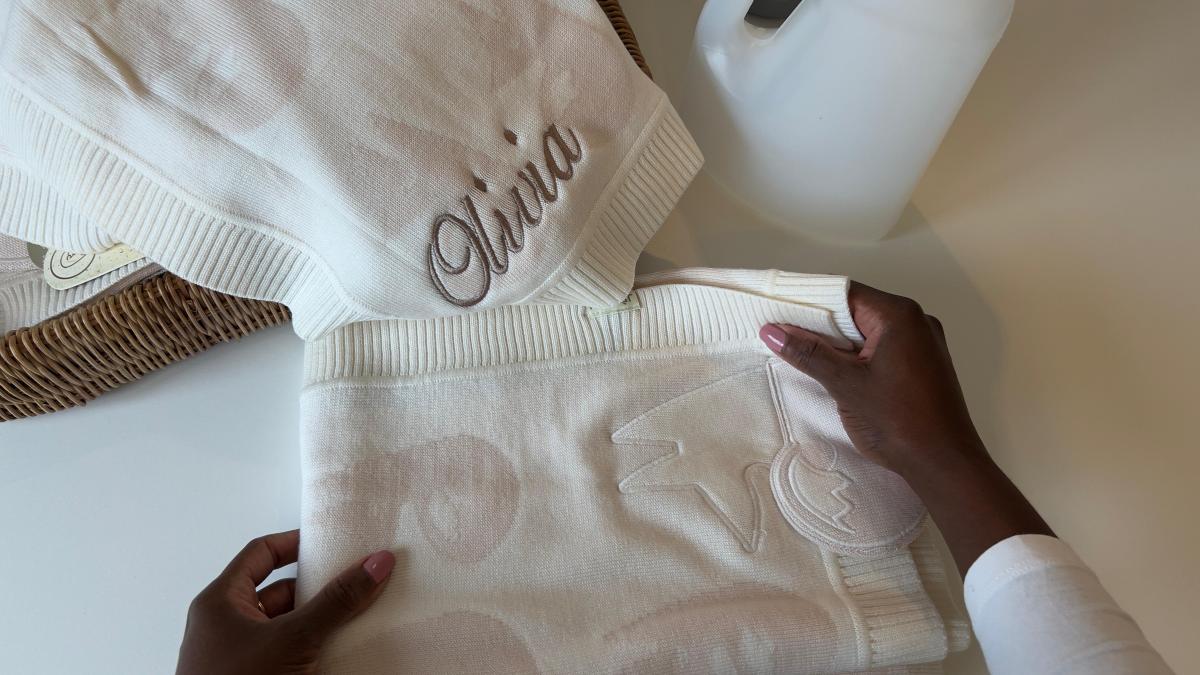
Official guidance from UK health bodies advises that babies should sleep on their back in a clear cot, free from pillows, duvets, bumpers and soft toys (the NHS). Many parents choose to keep decorative cushions out of the sleep space for longer, until their child is confidently mobile and able to move items independently. Treat that as a personal judgment rather than a fixed deadline, and always follow the guidance given by your health visitor.
A practical way to keep styling safe is to separate the room into two zones. The sleep zone, the cot and the floor immediately around it, stays clear. The styling zone, the chair, the shelf, the window seat, is where decorative pillows live. Thinking in those terms can make it easier to keep the two zones separate during a late-night feed or a nap transfer.
Practical steps help parents keep styling safe:
- Place decorative cushions on chairs, shelves or window seats only, never on or in the cot
- Remove any cushion from the chair before putting your baby down to sleep, and store it on a high shelf
- Check that cord, tassel and pom-pom details are securely stitched and out of reach, loose trims are a choking hazard
- Choose covers with concealed zips rather than buttons or ties that can work loose
- Wash covers regularly, following the care label, and check seams after every wash
Finally, think about fixing methods. Cushions on a shelf or window seat can be secured with a discreet adhesive pad or a fabric loop to stop them sliding. On a chair, a cushion with a textured reverse or a tie-back holds its position better than a smooth cover. These small details make the styled look more stable and reduce the chance of anything ending up where it shouldn't.
How to Coordinate Nursery Accessories With Your Pillows
Pillows work best when they echo other items in the room. Pick one colour from your palette and repeat it in a lamp base, a basket or a framed print. This creates a sense of cohesion without matching everything exactly.
Think about textures too. A knitted throw, a wooden toy and a linen cushion sit well together because they share a natural warmth.
Booking Your Nursery Styling Next Steps With JÈYS & I
Start by settling on your colour scheme, then choose pillow shapes that suit your chair and corners. Add one pattern and one textured solid, and keep every decorative piece away from the cot. Revisit the room after a week to see what feels balanced.
JÈYS & I creates premium baby accessories designed for comfort and thoughtful sensory detail. The Signature Fox Decorative Pillow adds a playful nursery accent at £29.99.
Frequently Asked Questions
How many decorative pillows should you use in a nursery?
Most nurseries work well with two to four decorative pillows, placed on a nursing chair, a reading corner or a window seat. Too many pillows make a small room feel busy and reduce the sense of calm. Start with two, step back and look at the room from the doorway, then add a third only if one area still feels bare. Keep the arrangement simple so the space stays easy to tidy and to live in.
How do you mix patterns on nursery pillows safely?
Pick one dominant pattern, one supporting pattern and a plain solid, then tie them together with a shared colour from the palette. Vary the scale so a large print sits beside a small one rather than another large print. Keep patterned pillows away from the cot itself, since nothing soft or loose should go inside a sleeping space. Mixing textures such as cotton, linen and knit adds interest even when patterns are kept restrained.
How do you keep nursery pillow styling simple and uncluttered?
Limit the palette to three or four colours and repeat at least one colour across pillows, a rug or artwork. Group pillows in odd numbers, which tends to look more relaxed than pairs. Store spare pillows in a cupboard or drawer so the room can be reset quickly after play or feeds. Regular fluffing and rotation keep the arrangement looking considered without constant rearranging.