5 Modern Nursery Wall Decor Ideas for Small Spaces
Last Updated: November 2, 2026
Quick Summary
Small-space nursery wall decor works best when you treat one wall as a single composition rather than filling every surface. Choose one focal wall, scale pieces down instead of multiplying them, and keep the top third of the wall clear so low ceilings feel higher. Limiting pattern and frames to one wall keeps a compact room calm.
- Pick one focal wall and leave the other walls calm to stop a small room feeling crowded.
- One larger framed print reads better than five small ones on a narrow wall.
- Keep the top third of the wall clear so low ceilings do not feel lower.
- Paper the wall behind the cot or the one you see first, not both.
- Three to five frames is the practical maximum on a narrow wall.
Table of Contents
- Why Small Nursery Wall Decor Needs a Different Approach
- Modern Nursery Accent Wall Ideas That Add Depth
- Nursery Wallpaper Ideas for Compact Rooms
- Modern Nursery Wall Art That Grows With Them
- Nursery Gallery Wall Ideas Without the Clutter
- Safe Installation and Cot Placement
- Budgeting and Adapting Your Wall Decor as They Grow
- Choosing a Final Piece for Your Small Nursery
- Frequently Asked Questions
Why Small Nursery Wall Decor Needs a Different Approach
Small nursery wall decor works best when you treat the wall as a single composition, not a blank space to fill. In a compact room, scale and spacing matter far more than the number of items.
Most guides show rooms with generous walls. Few explain what to do when your baby's room is the box room, the alcove, or the corner of a bedroom you share.
Scale, Focal Points and the One-Wall Rule
Pick one wall and make it the feature. Leave the other walls calm. This single choice stops a small room feeling crowded.
Three practical rules to follow:
- One focal wall only. A second decorated wall splits attention and shrinks the room.
- Scale down, don't multiply. One larger framed print reads better than five small ones on a narrow wall.
- Keep the top third clear. Art hung high above eye level makes low ceilings feel lower.
If you want to explore how decor affects your baby's experience of the room, there are sensory-friendly nursery ideas worth reading before you commit to a scheme.
Modern Nursery Accent Wall Ideas That Add Depth
A nursery accent wall is a single painted or papered wall that draws the eye and adds depth without closing a room in.
Depth comes from contrast, not busy pattern. A deeper tone on one wall pulls it forward, which can make a narrow room feel wider. Keep the other walls pale so the contrast does the work.
Painted Shapes and Colour Blocking
Painted shapes are the cheapest way to create a feature wall, and the easiest to change later.
- Half-wall colour blocking. Paint the lower half in a deeper tone, the upper half pale. This adds height and hides marks near the floor.
- An arch or circle behind the cot. A soft painted shape frames the sleeping area without any hanging items.
- A wide horizontal band. A single painted stripe at mid-height adds structure to a plain wall.
Choose low-odour, water-based paint where you can, and let the room air well before your baby sleeps in it.
If you are planning an accent wall, a neutral nursery colour palette guide can help you choose tones that stay calm in a small space.
Nursery Wallpaper Ideas for Compact Rooms
Nursery wallpaper tends to work best in a small room when the pattern is small-scale and the coverage is limited to one wall. Large motifs repeated on every wall overwhelm a compact space. A single papered wall, or a papered alcove, gives pattern without pressure.
Choosing Pattern Scale for a Small Room
The single most useful decision is scale. A pattern that reads as texture from the doorway, fine florals, soft clouds, small animal illustrations, a subtle mountain scene, adds interest without shouting.
A practical test: stand in the doorway and look at a sample from across the room. If you can pick out individual motifs easily, the pattern is probably too large.
Three pattern types that work well in compact rooms:
- Small-scale repeats. Fine florals, dots, tiny stars or a delicate trellis. These add texture without visual noise.
- Scenic papers with a low horizon. Cloudscapes and soft mountain ranges work because the interest sits low, leaving the upper wall calm.
- Tonal or two-colour prints. A pattern in two close tones reads as texture and is far easier to live with than a multi-colour repeat.
How Much Wall to Cover
One wall is usually enough. Paper the wall behind the cot or the wall you see first when you open the door, not both. Papering an alcove or a single chimney breast gives pattern without committing the whole room.
If you want pattern on more than one wall, keep the second treatment plain. Two patterned walls split attention and make a small space feel boxed in.
Renter-Friendly and Removable Options
Removable wallpaper and wall stickers suit rented homes and short-term plans.
- Peel-and-stick wallpaper. Goes up on one wall and comes away without damaging most painted surfaces. Look for papers described as repositionable where you can.
- Wall decals and stickers. Clouds, stars and animal shapes can be arranged loosely and moved as your baby grows. Buy two or three sets rather than one large scene so you can change the arrangement.
- Wall murals. A single large scene, such as a mountain range or cloudscape, covers one wall and needs nothing else. Murals usually come in panels, so measure the wall height and width before ordering.
Installing and Removing Without Damage
A few practical steps make the difference between a clean removal and a patch of pulled paint:
- Test a small patch first. Freshly painted walls and some finishes grip adhesive more firmly than expected. Leave a test strip for a week before committing.
- Clean and dry the wall. Dust and grease stop adhesive bonding evenly, which leads to peeling edges.
- Avoid damp or recently painted walls. Applying decals to a damp or newly painted wall can pull the paint away when removed. Most paints need several weeks to cure fully.
- Remove slowly and at a low angle. Warm the adhesive gently with a hairdryer on a cool setting and peel back steadily rather than pulling straight out.
Budget Notes
Wallpaper can be a cost-effective way to change a small room, because you need relatively little of it. Removable papers usually cost more per roll but can save on redecorating later, which matters if you rent or plan to move.
Modern Nursery Wall Art That Grows With Them
Modern nursery wall art is framed or unframed artwork chosen for a baby's room that still looks right years later.
Choose subject matter with staying power:
- Animal illustrations in soft, neutral tones
- Nature-inspired scenes, including clouds, mountains and simple landscapes
- Framed prints with plenty of white space around the image
Neutral decor does more work here than bright colour. If you want a scheme that will not date, these timeless nursery decor style ideas are a useful starting point.
The one drawback of buying a matching set: it locks you into a single look.
Nursery Gallery Wall Ideas Without the Clutter
Gallery walls fail in small rooms when there are too many frames and no structure. The fix is fewer pieces, tighter spacing and one clear layout, and a plan for how the arrangement will change as your child grows.
Choosing Frame Sizes and Count
Three to five frames is the practical maximum on a narrow wall. More than five reads as clutter. Mix sizes rather than buying a matching set: one larger anchor frame (around A3 or 30 × 40 cm) with two or three smaller ones (A4 or 21 × 30 cm) gives the group a natural centre.
Spacing and Hanging Height
Consistent gaps are what make a gallery wall look intentional rather than accidental.
- Keep gaps between frames consistent. Roughly 5-7 cm works well at nursery scale; wider gaps make the group feel disconnected.
- Hang the centre of the group at a comfortable viewing height. Aim for the middle of the arrangement to sit around 145-155 cm from the floor.
- Keep the lowest frame well above the cot. Nothing should hang within reach of a standing baby, and nothing should be fixed directly above the cot.
Laying Out Before You Hang
Lay the frames on the floor first, then mark the arrangement with painter's tape on the wall before fixing anything. This lets you check the spacing against the room's proportions and adjust before making holes.
Renter-Friendly Hanging Methods
If you rent or want to avoid filling the wall with holes, there are alternatives to nails and screws:
- Adhesive picture hooks. Suitable for lightweight frames, provided the wall is clean, dry and fully cured. Check the weight rating on the pack and stay well under it.
- Picture ledges. A single shelf-style ledge holds several frames without individual fixings, and the arrangement can be changed without new holes. Fix the ledge securely into a stud or with appropriate wall fixings.
- Leaning frames on a shelf. For very small rooms, a short picture ledge with frames leaning against the wall gives the gallery look without a full hanging arrangement.
Adapting the Arrangement as They Grow
A gallery wall is easy to update if you plan for it. Choose frames with removable mounts so you can swap the artwork without buying new frames, and keep the palette neutral so a new print still fits.
If you want a scheme that will not date, these timeless nursery decor style ideas are a useful starting point.
Here are the key measurements the article gives for a calm gallery wall in a small nursery.
| Item | Value | Note |
|---|---|---|
| Frames on a narrow wall | Three to five | More than five reads as clutter |
| Anchor frame size | Around A3 or 30 × 40 cm | One larger frame gives the group a centre |
| Smaller frame size | A4 or 21 × 30 cm | Two or three smaller frames alongside |
| Gaps between frames | Roughly 5-7 cm | Wider gaps make the group feel disconnected |
| Centre of group height | Around 145-155 cm from the floor | A comfortable viewing height |
| Distance from corner or adjacent wall | At least 15-20 cm | Keeps breathing room at the edges |
Safe Installation and Cot Placement
Safe installation matters more in a nursery than in any other room.
Follow these basics:
- Fix heavy items into a wall stud or use appropriate wall fixings for the wall type.
- Keep framed art, shelves and mirrors away from directly above the cot.
- Use cord-free window coverings and keep blind and curtain cords well out of reach.
Official home safety guidance for parents is available from organisations such as the NHS, which offers advice on creating a safe sleep environment (the NHS).
A single wall shelf can add storage and display space without taking up floor area. Fix it securely and keep heavy items low.
Budgeting and Adapting Your Wall Decor as They Grow
Wall decor is one of the easiest parts of a nursery to phase, because it can change without touching the rest of the room.
A sensible order of spending:
- Start with paint or one roll of removable wallpaper. This gives the biggest change for the least money.
- Add two or three framed prints. Choose frames you can reuse with new artwork later.
- Finish with one decorative piece, such as a garland or a soft hanging.
Plan for change from the start. Choose a neutral base, then swap the smaller pieces as your child's interests shift.
If cost is a concern, there are practical ideas for a minimalist nursery on a budget that work well in compact rooms.
Choosing a Final Piece for Your Small Nursery
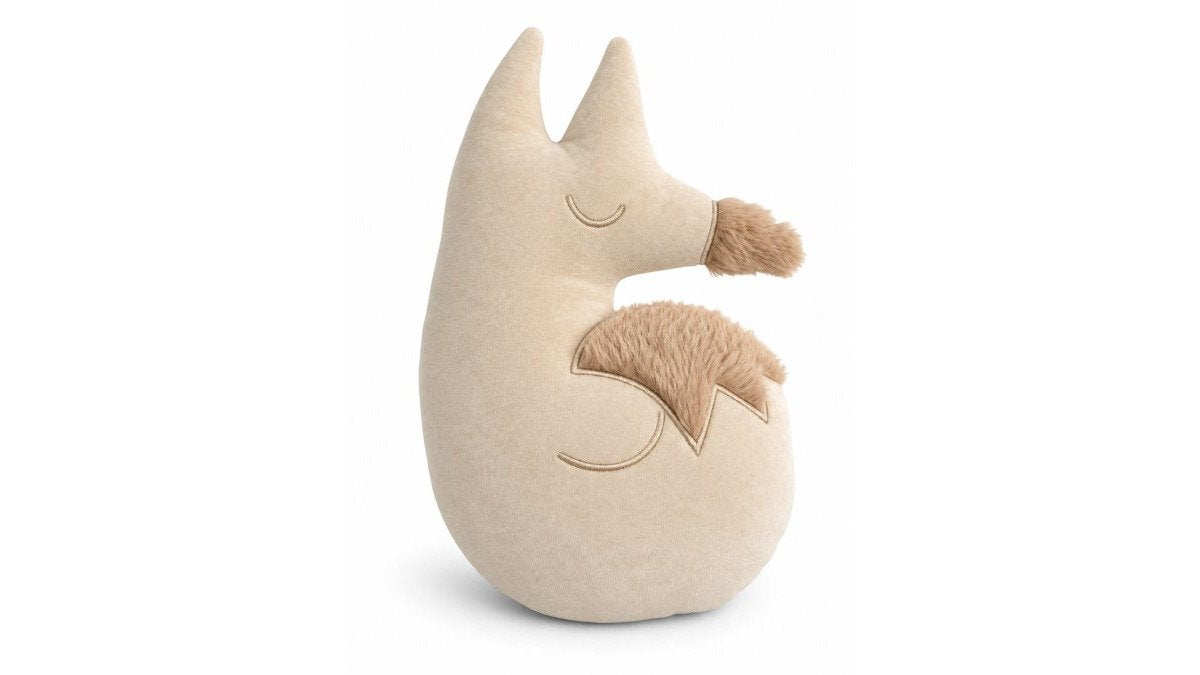
One considered finishing piece does more for a small nursery than a wall full of small items. A reader looking for one finishing touch can browse a decorative pillow that suits a modern nursery.

The Signature Fox Decorative Pillow from JÈYS & I adds a single considered accent to a neutral scheme.
Best for: adding warmth and personality to a neutral nursery without more wall hangings. Skip if: you are still deciding on your colour palette, since the piece works best once the base tones are set.
Frequently Asked Questions
How can I decorate the walls in a small nursery without making it feel cramped?
Pick one wall as the focal point and keep the rest quiet. A single accent wall, a tight gallery arrangement or one large framed print will read as deliberate rather than busy. Use a restrained colour palette of two or three tones, and choose pieces with slim frames so the wall itself still shows through. Scale matters more than quantity: one 50cm x 70cm print often works better in a compact room than six small ones, because it gives the eye somewhere to rest.
What wall colours make a small nursery feel bigger?
Light, low-contrast tones tend to make a small room feel more open: soft off-whites, pale greys, muted sage and warm sand all work well. Painting the walls and ceiling a similar shade reduces visible lines and makes the space feel taller. If you want colour, use it on one wall or in the decor rather than across every surface. Deeper shades can work beautifully in a small room too, but they need good lighting and a clear focal point to avoid feeling closed in.
How do you arrange wall art in a small nursery?
Hang art at a height that suits the room rather than only the cot, roughly 145cm to 150cm from the floor to the centre of the piece, so it still works as your child grows. Keep the arrangement tight, with 5cm to 8cm between frames, and align the outer edges to a single rectangle. Above a cot, choose lightweight framed prints or canvas and fix them securely into a wall stud or with appropriate plasterboard fixings, well out of reach.
What are some renter-friendly nursery wall decor options?
Removable wallpaper, wall stickers and decals, hanging garlands and freestanding shelves let you add character without permanent changes. Check that adhesive products are described as removable and low-tack, and test a small patch first on painted walls. Tension rods, picture ledges and leaning frames also work well and leave no holes. Keep any cord, ribbon or hanging loop well out of reach, and avoid hanging anything heavy above the cot.
A small nursery asks for restraint, not fewer ideas. Choosing one focal wall, scaling pieces to the space, fixing everything securely and planning for change will give you a room that feels calm now and still works in a few years. JÈYS & I designs premium baby accessories with a neutral, timeless palette and thoughtful sensory details, made to sit within a considered nursery rather than dominate it. Explore the collection to find a finishing piece that grows with your child.