
Article: Alternatives to Plastic Baby Toys: A Practical Guide

Alternatives to Plastic Baby Toys: A Practical Guide
Last Updated: November 22, 2026
Quick Summary
Plastic baby toys are common and inexpensive, but many parents now choose natural alternatives such as solid wood, natural rubber and quality fabric. Each material suits a different stage, so check finishes, sizes and wear before every use.
- Babies explore mainly by mouthing, so the materials in a toy matter most in the first year.
- Solid wood stackers and blocks suit babies from around six months who enjoy building and knocking things down.
- Natural rubber teethers have a soft, flexible feel and should be kept out of direct sun for long periods.
- Check that any toy finish or paint is clearly labelled as suitable for children's toys.
- Inspect toys every few weeks, and set aside any that are cracked, split or have loose seams.
Table of Contents
- Why Parents Look Beyond Plastic Baby Toys
- Wooden Baby Toys: Strengths, Limits and Who They Suit
- Fabric Baby Toys and Soft Sensory Play
- Natural Rubber and Other Plant-Based Materials Compared
- How to Choose Safe Toys for Babies at Each Age
- How to Clean Wooden Baby Toys and Other Natural Materials
- Building a Plastic-Free Toy Collection on a Realistic Budget
- Choosing Your First Plastic-Free Teether and Dummy Clip
- Frequently Asked Questions
Why Parents Look Beyond Plastic Baby Toys
Many parents start looking for alternatives to plastic baby toys once their little one begins putting everything in their mouth. Babies explore the world through touch and taste, so the materials in a toy matter more in the first year than many people expect. Plastic toys are common and inexpensive, but some parents prefer natural materials such as wood, cloth and natural rubber.
A common reason for switching is wanting fewer synthetic materials in the nursery. Another is simply enjoying toys that look and feel beautiful on a shelf. Whatever the motivation, the most useful starting point is knowing what each material offers and where it falls short.
Wooden Baby Toys: Strengths, Limits and Who They Suit
Wooden baby toys are among the most popular plastic-free options. Solid wood stacking toys, rattles and simple blocks offer firm shapes, a satisfying weight and a natural look that many parents find appealing. Wood also suits older babies who enjoy building and knocking things down.
There are limits, however. Rough edges or poorly finished surfaces can cause problems. Look for smooth, well-sanded pieces and check that any paint or finish is clearly labelled as suitable for children's toys.
Fabric Baby Toys and Soft Sensory Play
Soft books, crinkly textured squares and plush companions give babies different sensations to explore, from smooth cotton to ribbed or crinkly surfaces.
Check washing instructions before buying, and remove any loose trims or small parts before giving fabric toys to a baby who mouths everything.
Natural Rubber and Other Plant-Based Materials Compared
Natural rubber, bamboo and other plant-based materials each suit different needs. Natural rubber has a soft, flexible feel. Bamboo fabric is light and smooth. Plant-based vegan leather offers a leather-like look.
| Material | Feels like | Good for | Things to consider |
|---|---|---|---|
| Natural rubber | Soft, flexible | Teethers | Keep out of direct sun for long periods |
| Bamboo fabric | Smooth, light | Clips and soft accessories | Check care label before washing |
| Plant-based vegan leather | Firm, leather-like | Structured accessories | Wipe clean rather than soak |
| Solid wood | Firm, heavy | Stacking and rattles | Check finish for children's use |
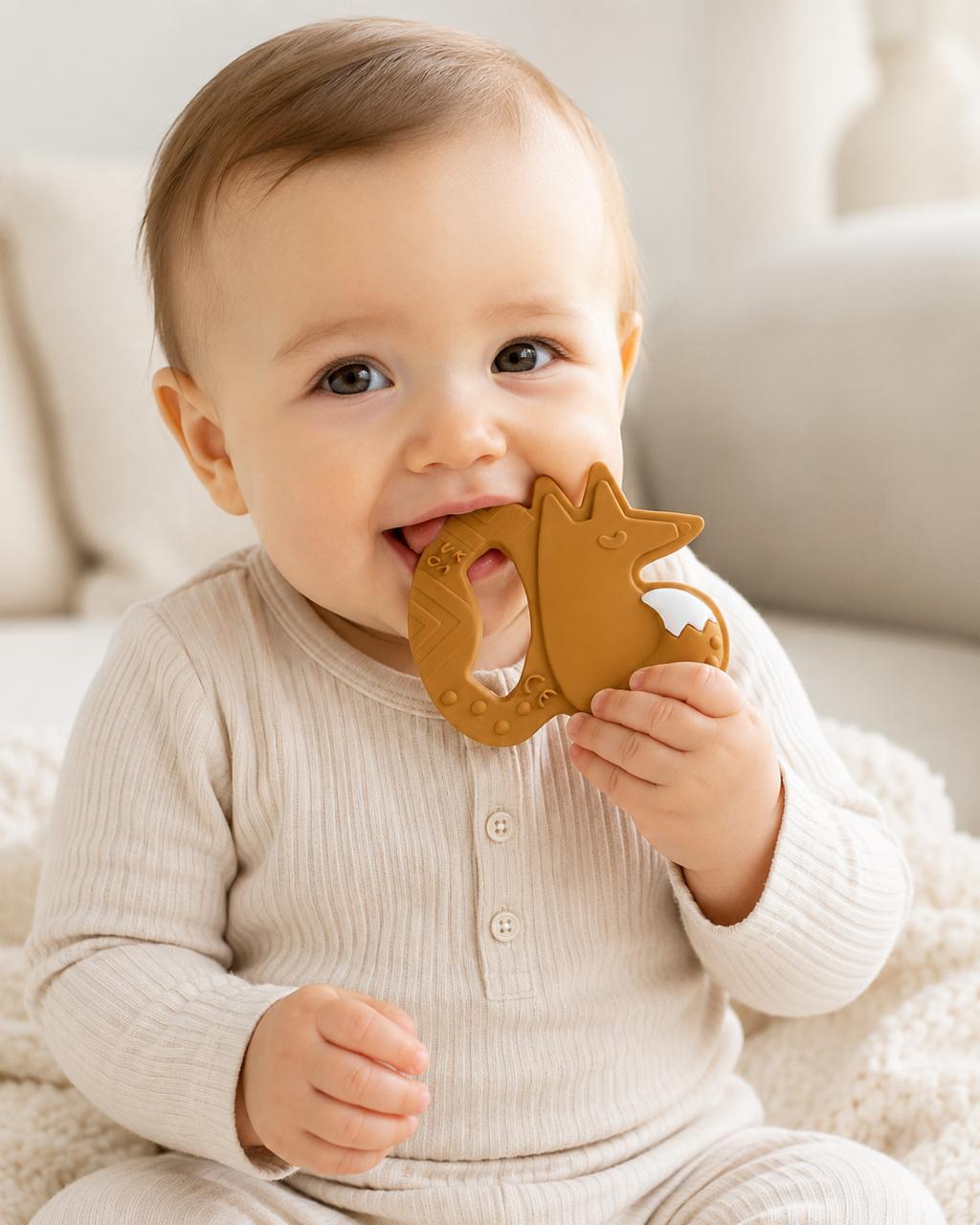
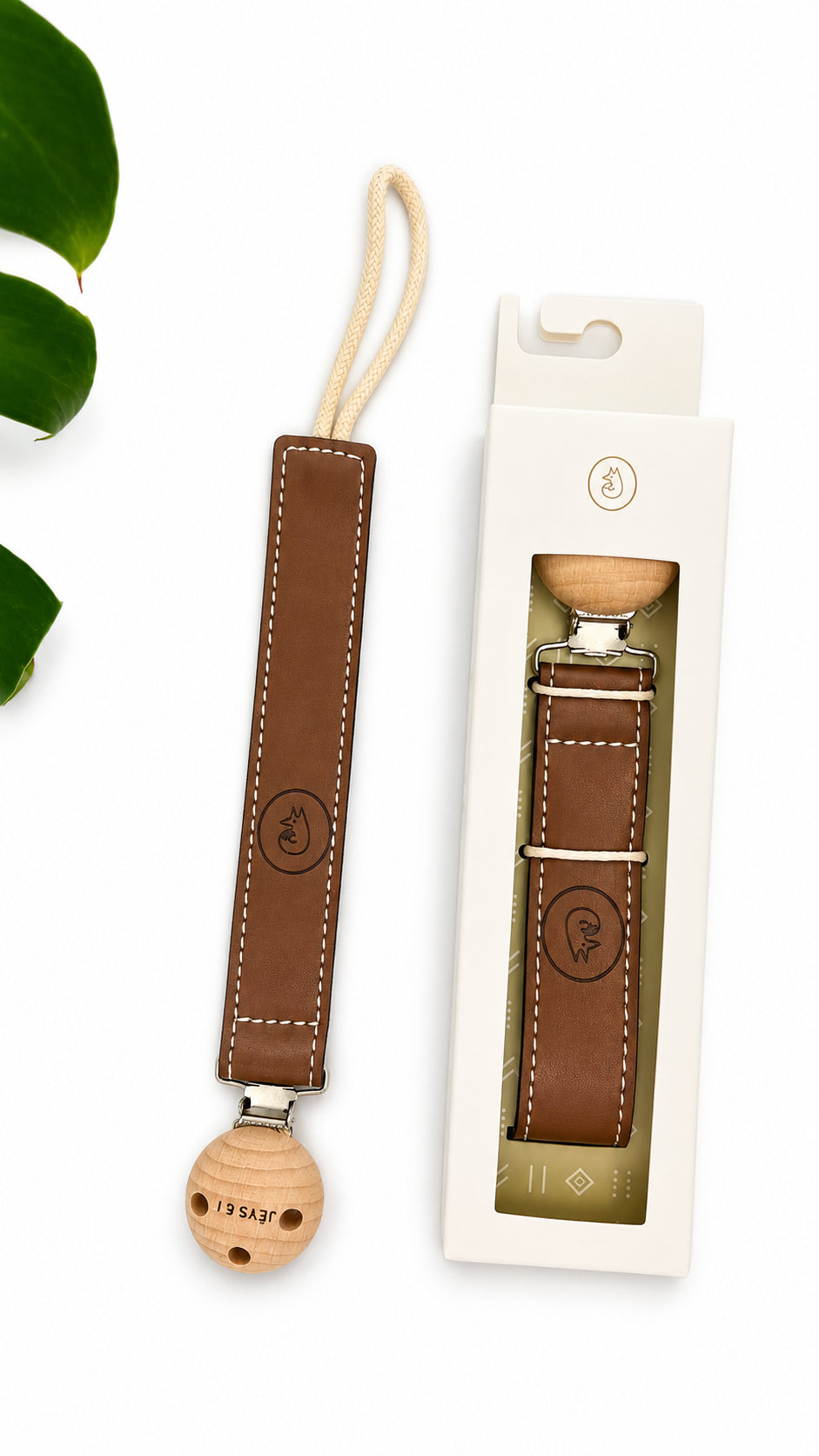
The Signature Fox Natural Rubber Baby Teether is made from 100% natural rubber and has a one-piece sealed design with no holes for water to enter. For a plant-based option, the Plant-Based Baby Dummy Clip combines soft bamboo fabric with plant-based vegan leather and a secure metal clip.
How to Choose Safe Toys for Babies at Each Age
A baby's stage of development determines how they will use a toy, and therefore what could go wrong.
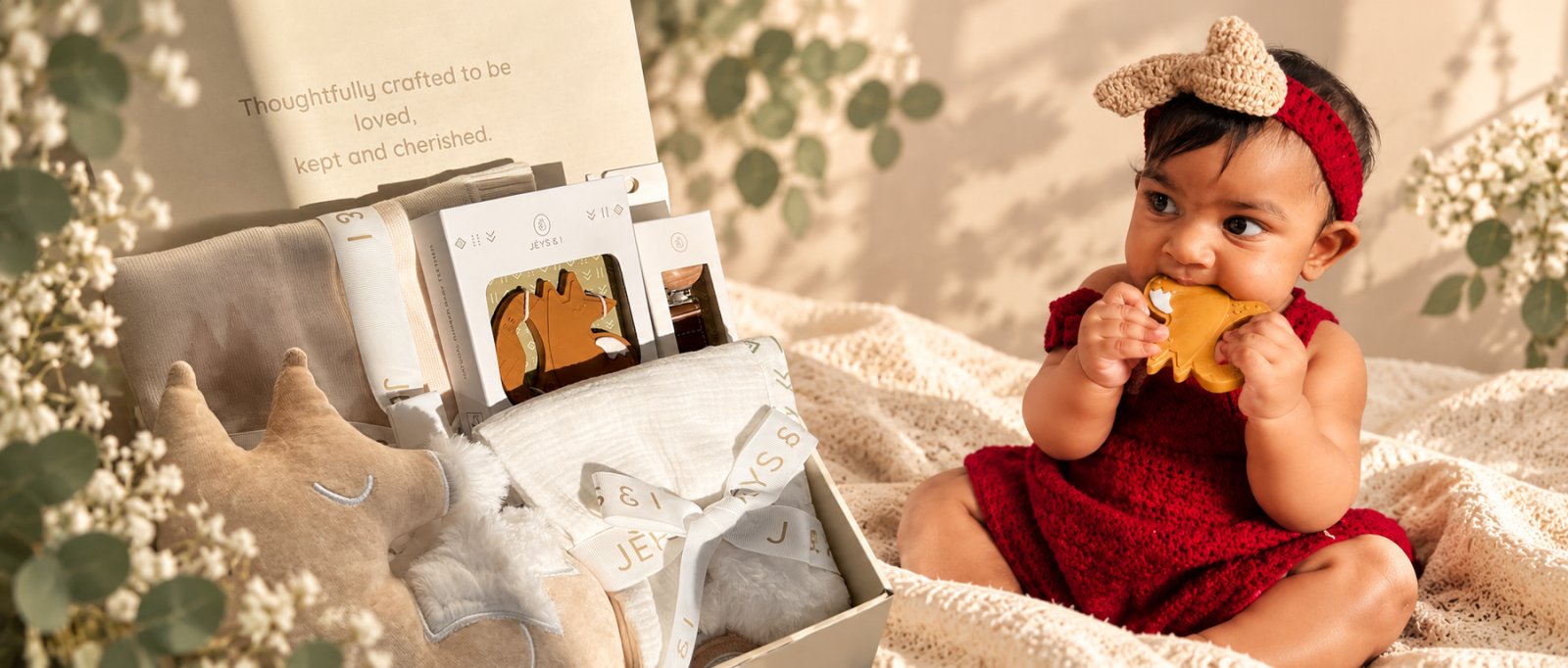
Newborns to around three months. Babies at this stage see best at close range and explore mainly by grasping and bringing things to the mouth. Look for light, simple shapes that are easy to hold, with no detachable parts. Soft fabric squares and light natural rubber pieces tend to suit this stage because they are gentle against the face and easy to release.
Around three to six months. Reaching, batting and sustained mouthing begin. This is when the mouthing question becomes central. A toy that fits entirely inside a baby's mouth is a choking risk, so check the size of any piece against a small-parts gauge or compare it with a known-safe object. Avoid anything with beads, bells or trims that could work loose under repeated chewing.
Around six to twelve months. Babies pass objects between hands, bang them together and start to sit and shuffle. Sturdiness and weight matter more now. Solid wood stackers and simple blocks suit this stage, provided the finish is smooth and any paint or coating is labelled as suitable for children's toys. Check joints and fixings regularly, because repeated dropping loosens them.
Finishes, paints and dyes. This is where natural materials are not automatically safer. Wooden toys may be finished with oils, waxes or paints, and fabric toys with dyes; all of these should be described by the maker as suitable for children's toys. If a finish is not stated, ask before buying. A common pattern is that well-made pieces list their finish clearly, while cheaper pieces are vague.
What the rules require. Toys sold in the UK should carry the appropriate conformity marking along with the importer's details, and that marking should not be taken as a guarantee of suitability for your baby's stage, so combine it with your own inspection.
A practical inspection routine. Before first use, tug at seams, trims and fixings; run a finger around edges for roughness; and check that any cord or strap is short enough not to form a loop. Then repeat the check every few weeks and after any illness or heavy chewing. Watch out: a toy that was safe last month can become unsafe once a seam loosens or a finish wears through, so treat inspection as ongoing rather than a one-off.
If a toy has been dropped, chewed hard or left outside, set it aside until you have checked it. Cracks in wood, splits in rubber and worn patches on fabric are all reasons to stop using a piece rather than to patch it up and hope.
How to Clean Wooden Baby Toys and Other Natural Materials
Natural materials need slightly different care from plastic. Wooden toys should be wiped with a damp cloth and dried straight away, rather than soaked, as prolonged moisture can warp or stain wood. Mild, unscented soap is usually enough for everyday cleaning.
Fabric toys should be washed according to their care label, ideally in a laundry bag to protect delicate trims. If you are considering a soft toy, you can learn how a plush companion supports comfort and sensory play. Avoid harsh cleaning products on any natural material, and allow toys to air dry fully before giving them back to your baby.
Building a Plastic-Free Toy Collection on a Realistic Budget
A plastic-free collection does not need to be built all at once, and it does not need to be expensive. The most useful way to think about budget is cost per use rather than sticker price. A £25 teether that is used every day for six months works out at a few pence a day, while a cheaper toy that is abandoned after a fortnight can cost more in real terms.
Start with the pieces that get daily use. For most families that means one teether, one soft fabric toy and one simple wooden stacker or set of blocks. These three cover mouthing, comfort and early building play, and they tend to be the pieces that stay in rotation longest. Add seasonal or novelty pieces only once you can see which of the core three your baby actually reaches for.
Compare like with like. Natural rubber, solid wood and quality fabric usually cost more up front than moulded plastic, but they also tend to hold their shape and finish for longer. A useful habit is to note the price and the expected years of use side by side. A wooden stacker passed from a first child to a second effectively halves its cost per child.
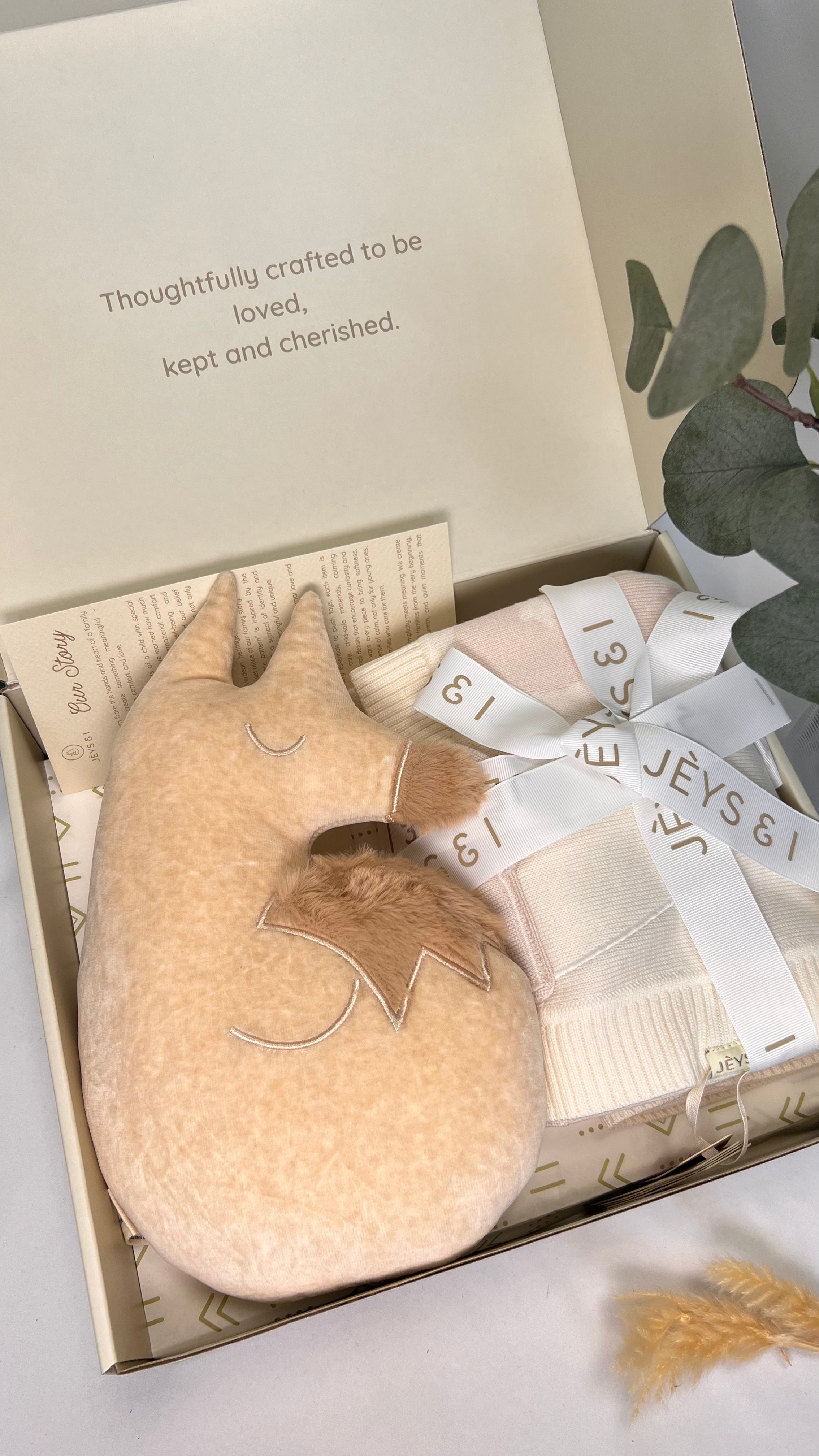
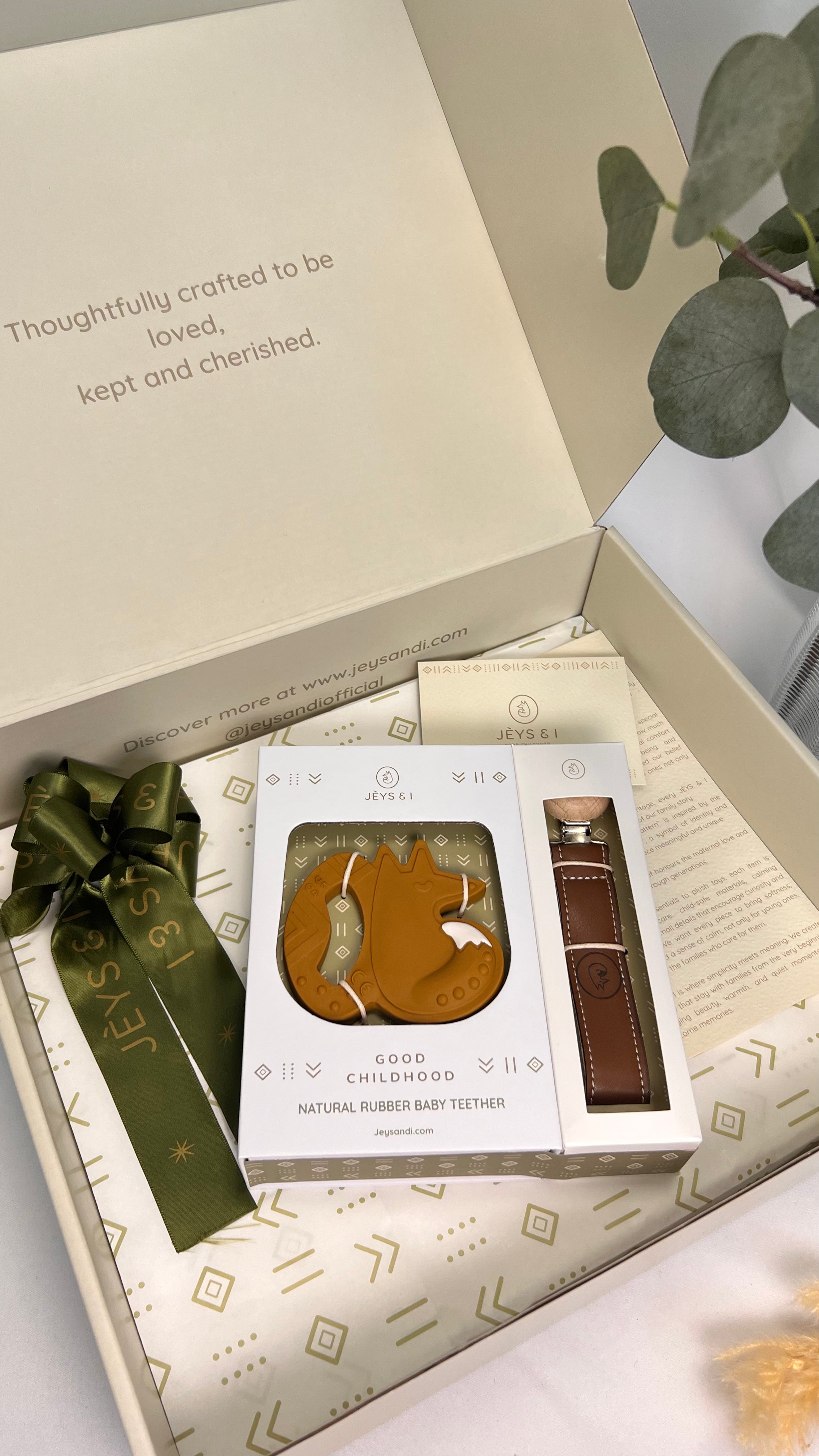
Look at bundles and sets. Buying a coordinated pair or set often costs less than buying the pieces separately, and it removes the guesswork of matching items. The Teething Essentials Duo, which pairs the Fox Teether with the Plant-Based Dummy Clip, costs £39.99.
Where to save and where to spend. Save on decorative pieces and on toys your baby will outgrow quickly. Spend on the items that go in the mouth, because finish and material quality matter most there, and on anything that will be used daily. Second-hand wooden toys can be excellent value provided you inspect the finish and fixings carefully before use.
Factor in care and longevity. A toy that can be wiped clean and aired dry will last longer than one that traps moisture. Storing natural materials away from damp and direct sun protects both the material and the finish, which in turn protects your outlay. Watch out: a bargain that needs replacing every few months is rarely the cheaper option once you add up the replacements.
A simple starting budget. Many families find that three well-chosen core pieces cover the first year comfortably, with room to add one or two gifts along the way. Choosing fewer, higher-quality items also reduces waste, because pieces that last can be passed on, stored for a sibling or kept in good condition for longer.
Choosing Your First Plastic-Free Teether and Dummy Clip
For a first teether, a natural rubber option with a sealed, one-piece design is easy to clean and gives babies a soft surface to explore. The Signature Fox Natural Rubber Baby Teether, priced at £25.99, is a good choice if you want a simple, plastic-free teether with a charming design.
If your baby uses a dummy, a dummy clip helps keep it within reach. The Plant-Based Baby Dummy Clip, priced at £19.99, attaches to suitable clothing with a secure metal clip. Check that any clip fits your baby's dummy or teether securely, and never leave a baby unsupervised with a clip or cord attached to clothing. You can read more about what plant-based dummy clips are made from and which UK safety standards to check. For parents choosing both at once, the Teething Essentials Duo brings the two together for £39.99.
Frequently Asked Questions
Are wooden baby toys safer than plastic ones? Neither material is automatically safer. Wooden toys need smooth finishes and safe paints, while plastic toys need checking for small parts and cracks. Choose any toy by checking its age recommendation, condition and finish.
Can babies chew on natural rubber teethers? Natural rubber teethers are designed for babies to hold and explore. Check the teether regularly for wear, clean it after use, and replace it if it becomes torn or damaged.
How often should fabric baby toys be washed? Wash fabric toys whenever they become soiled or wet, following the care label. Dry them fully before giving them back to your baby.
Frequently Asked Questions
What can I use instead of plastic toys for a baby?
Good alternatives include wooden toys, fabric toys, and toys made from natural rubber or other plant-based materials. Wooden stacking rings and blocks offer clear shapes and textures, while soft cloth books and rattles suit very young babies. Natural rubber teethers give gums something firm to press on. Look for simple designs without small detachable parts, and check the care instructions before buying so you know how the toy will be cleaned and kept in good condition over time.
Are wooden toys suitable for babies?
Wooden toys can suit babies well when they are smooth, well finished and free from small parts that could come loose. Chunky wooden rings, large blocks and simple rattles are common choices for younger babies. Check that any paint or finish is clearly described as suitable for children's toys, and inspect the toy regularly for splinters, cracks or loose parts. Always supervise babies during play, particularly when they are mouthing objects.
How should I clean wooden baby toys?
Wipe wooden baby toys with a damp cloth and a mild, unscented soap, then dry them straight away with a clean towel. Avoid soaking wood in water, as this can cause swelling, warping or cracking, and do not put wooden toys in a dishwasher. Let them air dry fully before returning them to play. If a toy has been used by a baby who mouths it, clean it more often, and check the manufacturer's care instructions for any specific guidance.
How do I choose a safe toy for a baby?
Start by checking the age guidance on the packaging and choosing toys suited to your baby's stage of development. For babies who mouth everything, avoid toys with small parts, loose strings or detachable pieces. Look for smooth edges, sturdy construction and clear care instructions. Inspect toys regularly for damage and remove anything that becomes broken or worn. Supervise play, especially when introducing a new toy.


