Article: How to Pick Durable Baby Blankets: 2026 Parent Guide
How to Pick Durable Baby Blankets: 2026 Parent Guide
Table of Contents
- What You'll Need Before You Start Comparing
- The Best Fabric for Baby Blankets: What Actually Lasts
- Safe Materials for Newborn Bedding: What to Check on the Label
- How to Pick Durable Baby Blankets: Five Quality Markers
- How to Wash Baby Blankets Without Shortening Their Life
- Common Mistakes Parents Make When Buying Durable Baby Blankets
- Conclusion
- Frequently Asked Questions
Last Updated: September 17, 2026
What You'll Need Before You Start Comparing
Before you compare a single blanket, get clear on three things: how often it will be washed, whether it will be used for sleep or for play, and who else might inherit it. Durable baby blankets are not the thickest or the most expensive ones on the shelf. They are the ones whose fabric, stitching and edge finish survive repeated washing without pilling, fraying or losing shape.
This guide from JÈYS & I LTD walks through the fabric choices, label checks and care habits that separate a blanket which lasts through two or three children from one that looks tired after a month. Nothing here is guesswork. It comes from the practical realities of everyday family life: sick days, spit-up, and a washing machine that never really stops.
The Best Fabric for Baby Blankets: What Actually Lasts
The best fabric for baby blankets balances softness against how well it holds up to washing. Natural fibres generally win on breathability and comfort, while synthetic blends win on shape retention. The right answer depends on whether the blanket is for sleep, for prams, or for tummy time on the floor.
Natural Fibres: Cotton, Bamboo and Merino
Cotton is the workhorse. A tightly woven cotton blanket keeps its shape through frequent washing, and organic cotton avoids the chemical residue that concerns parents of newborns. Bamboo feels cooler and silkier against skin, though it can pill faster if the weave is loose. Merino wool regulates temperature beautifully and resists odour, but it needs gentler handling than cotton.
A common mistake is assuming "natural" automatically means durable. A loosely knitted bamboo blanket can snag within weeks. Look at the weave density, not just the fibre name.
Synthetic Blends and Why They Split Parents
Polyester and microfibre blends hold colour and shape well, and they dry quickly. That convenience is real. The trade-off is breathability: synthetic fibres trap heat, which matters for a blanket used near a sleeping baby. Many parents find a cotton-rich blend with a small synthetic percentage gives a reasonable middle ground, provided the cotton content is high enough to keep the fabric feeling soft rather than plasticky.
Safe Materials for Newborn Bedding: What to Check on the Label
Safe materials for newborn bedding come down to what the label actually says, not what the packaging implies. Check for fibre composition, any flame-retardant or finishing treatments, and whether the dyes are described as low-impact or OEKO-TEX certified.
Two checks matter most:
- Fibre content with percentages. "Cotton blend" tells you nothing. "95% organic cotton, 5% elastane" tells you exactly what you are buying.
- Certification marks. Independent testing schemes verify that a fabric is free from harmful substance levels. A genuine certification is printed with a licence number you can look up.
If a label is vague about composition or finishing, treat that as a signal to keep looking. Transparency is a reasonable proxy for how carefully a blanket was made.
UK government guidance on product safety and labelling
How to Pick Durable Baby Blankets: Five Quality Markers
Learning how to pick durable baby blankets comes down to five markers you can check in under a minute: stitch density, edge finish, fabric weight, weave tightness and how the care label reads. A blanket that passes all five will outlast most of what sits beside it on the shelf.
Here is the quick-reference version:
Marker |
What to Look For |
Why It Matters |
|---|---|---|
Stitch density |
Tight, even stitches with no gaps |
Loose stitching unravels first |
Edge finish |
Bound or double-stitched hems |
Raw edges fray after a few washes |
Fabric weight |
Substantial but not stiff |
Too light pills, too heavy traps heat |
Weave tightness |
Hold up to light, minimal see-through |
Loose weaves snag and distort |
Care label |
Clear, realistic instructions |
Honest labels mean honest manufacturing |
Stitching, Weight and Edge Finish
Run your thumb along the seam. If you can feel individual loose threads or see gaps between stitches, that seam will be the first thing to fail. A bound edge, where the fabric is folded over and stitched, holds up far better than a simple overlocked finish.
Weight is the marker parents misjudge most. A heavier blanket is not automatically more durable; it may simply be denser and less breathable. What you want is a fabric that feels substantial in the hand without stiffness, because stiff fabric cracks along fold lines over time.
At JÈYS & I LTD, our baby accessories are made with thoughtfully selected materials including organic cotton, merino wool and bamboo, chosen because they hold their softness through repeated washing rather than just on the first use.
How to Wash Baby Blankets Without Shortening Their Life
Washing is where most blankets lose their life, not everyday use. The fix is unglamorous: wash cooler than you think, skip the dryer where you can, and never let a wet blanket sit in the drum.
A workable routine for most fabrics:
- Wash at 30°C or lower on a gentle cycle
- Use a mild, non-biological detergent
- Skip fabric softener, which coats fibres and reduces absorbency
- Air dry flat or line dry, reshaping while damp
- Wash merino and bamboo less often, and spot-clean between washes
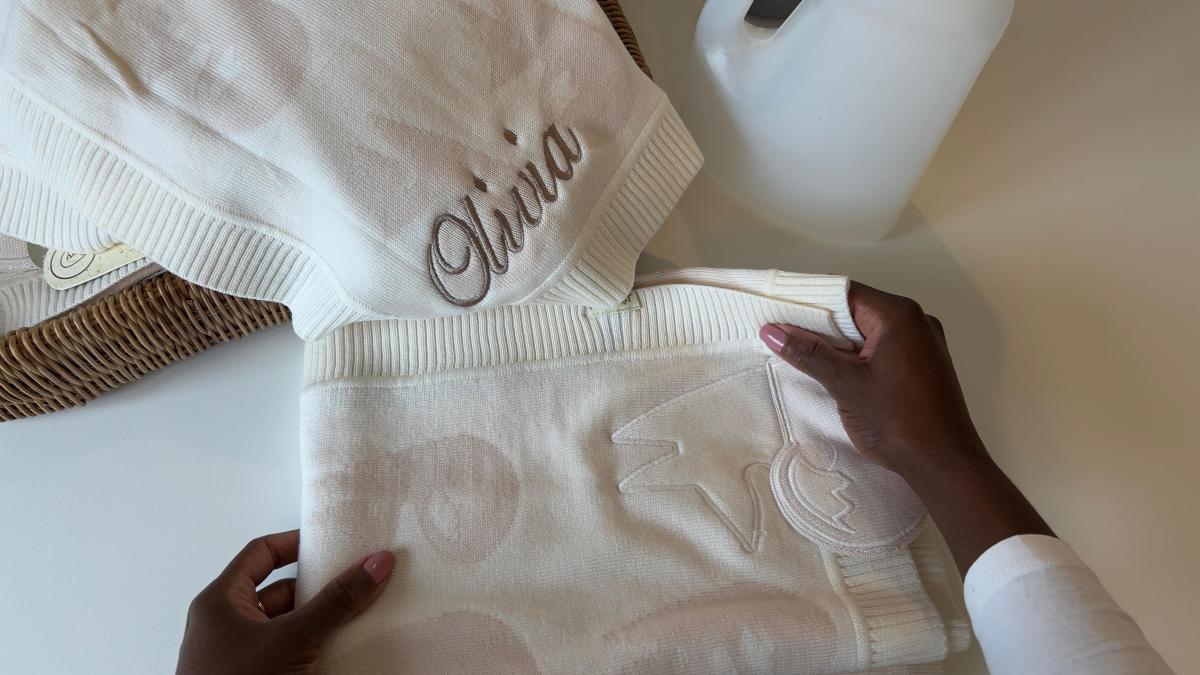
A parent's hands folding a soft neutral-toned baby blanket on a light wooden surface, with a laundry basket and gentle detergent bottle visible in the background of a bright nursery
Heat is the enemy. Hot washes and tumble drying shrink natural fibres and break down the elasticity in blends, which is why a blanket that felt generous in size can look a full size smaller after a month. If you must use a dryer, choose the lowest heat setting and remove the blanket while it is still slightly damp.
Common Mistakes Parents Make When Buying Durable Baby Blankets
The most common mistakes when buying durable baby blankets are buying for looks alone, trusting vague labels, and owning only one blanket. Any of these shortens the useful life of what you buy.
- Buying one blanket. A single blanket gets washed constantly and wears out fast. Two or three in rotation roughly doubles the lifespan of each.
- Choosing on colour and pattern first. A beautiful blanket with a loose weave will disappoint. Check construction before aesthetics.
- Ignoring the care label until after the first wash. If a blanket says hand wash only and you machine wash it, that is on the label, not the blanket.
- Assuming a higher price guarantees durability. Price reflects design and materials, not always construction quality. Check the five markers regardless of what you paid.
For parents weighing whether a premium blanket is worth it when a newborn outgrows things so quickly, the honest answer is that a well-made blanket is one of the few items that does not get outgrown. It becomes a pram blanket, then a comfort object, then something a younger sibling inherits.
Conclusion
Choosing well takes ten minutes of checking, not a bigger budget. Look at the fibre percentages, feel the seam, hold the weave to the light, and read the care label before you buy. Then wash it cooler than you think you need to.
At JÈYS & I LTD, our baby accessories are designed around exactly that principle: thoughtfully selected materials, gentle textures and considered craftsmanship, made to be used daily and to last. Explore the collection to find blankets built for the long haul, or browse our curated gift sets if you are buying for someone else's new arrival.
NHS advice on safe sleeping for babies
Durable baby blankets reward a little patience at the point of purchase. The challenge is that most of what is on offer looks identical until the third wash, when the loose seams and thin weaves reveal themselves. JÈYS & I LTD makes premium baby accessories with thoughtfully selected organic cotton, merino wool and bamboo, timeless neutral designs, and sensory-friendly textures built for everyday family life. Get started with JÈYS & I LTD and choose a blanket that stays soft, safe and intact through every child who uses it.
Frequently Asked Questions
What fabric is most durable for baby blankets?
Long-staple cotton and merino wool hold up best over repeated washing because their longer fibres resist pilling and thinning. Bamboo is soft but can weaken faster with heat. Synthetic blends like polyester last a long time structurally but may pill and trap heat. For durable baby blankets, look for tightly woven cotton or merino with reinforced edges, and always check the care label before buying.
Are organic cotton blankets more durable than synthetic blends?
Organic cotton is not automatically more durable, but it is often woven more tightly and finished without harsh chemical treatments that can weaken fibres over time. A well-made organic cotton blanket can outlast a cheap synthetic one because the weave holds its shape. Synthetic blends resist tearing but tend to pill and lose softness. The deciding factor is construction quality, not the organic label alone.
How do I wash baby blankets to keep them in good condition?
Wash at 30°C on a gentle cycle with a mild, non-biological detergent. Avoid fabric softener because it coats fibres and reduces breathability. Tumble dry on low or air dry flat away from direct sunlight. For merino wool, hand wash or use a wool cycle and never wring. Washing baby blankets this way prevents shrinkage, pilling and seam stress, which are the main reasons blankets wear out early.
How many baby blankets do I actually need for a newborn?
Three to four blankets cover most newborn needs: one for the pram, one for the cot, one for tummy time and a spare for washing day. If you choose durable baby blankets made from quality materials, you will not need to replace them as often. Buying fewer, better-made blankets is more practical than stocking up on cheap ones that thin after a few washes.