Why Babies Prefer Textured Fabrics: A Sensory Guide
Last Updated: November 14, 2026
Quick Summary
Babies learn about the world through touch from birth, and textured fabrics give them more to notice as their fingers brush across knitted surfaces, patterns and gentle padding. This variety can hold a baby's interest for longer than a flat, uniform surface, which is why many parents choose textured pieces for supervised play and everyday comfort.
- Touch is one of the first senses babies use to explore comfort, warmth and security.
- Babies move from automatic reflex responses to deliberate exploration over the following months.
- Watch for turning away, fussing, stiffening or scratching at skin as signs of dislike.
- Flat seams and printed rather than sewn-in labels are a common starting point for sensitive babies.
- Persistent redness, rashes or distress should be raised with your GP or health visitor.
Table of Contents
- How Babies Experience Touch From the First Weeks
- Why Textured Fabrics Hold a Baby's Attention
- How Tactile Development Shapes Sensory Comfort
- Soft Fabrics for Babies With Sensitive Skin
- Comparing Fabric Textures for Everyday Use
- Signs a Baby Dislikes a Fabric Texture
- Choosing a Gentle Sensory Blanket for Your Little One
- Frequently Asked Questions
How Babies Experience Touch From the First Weeks
Babies learn about the world through touch long before they can see clearly or speak. From birth, skin is one of the first ways a baby explores comfort, warmth and security. Understanding this helps parents and gift-givers choose soft, thoughtful pieces that suit a little one's early days.
Touch works alongside sight and sound. A newborn's skin carries sensations from the blanket they lie on, the arms that hold them and the fabric that wraps them. These signals help shape how a baby settles, feeds and rests.
Many parents notice that their baby settles more easily when wrapped in something soft and familiar. Gentle, consistent textures can give a sense of routine across the quiet moments between feeds and naps.
Parents often find it helpful to watch how their baby responds to different touches. Some babies relax with a smooth cheek against a soft cloth, while others seem more settled with a little more texture to hold onto.
Why Textured Fabrics Hold a Baby's Attention
Textured fabrics give a baby more to notice. A knitted surface, a jacquard pattern or a gently padded detail offers changing sensations as little fingers brush across it. This variety can hold a baby's interest for a few moments longer than a flat, uniform surface.
Watching a baby explore a textured blanket can be a simple joy for parents. Many families like to lay their baby on a soft, patterned blanket during supervised play, letting them feel the ridges and raised details at their own pace.
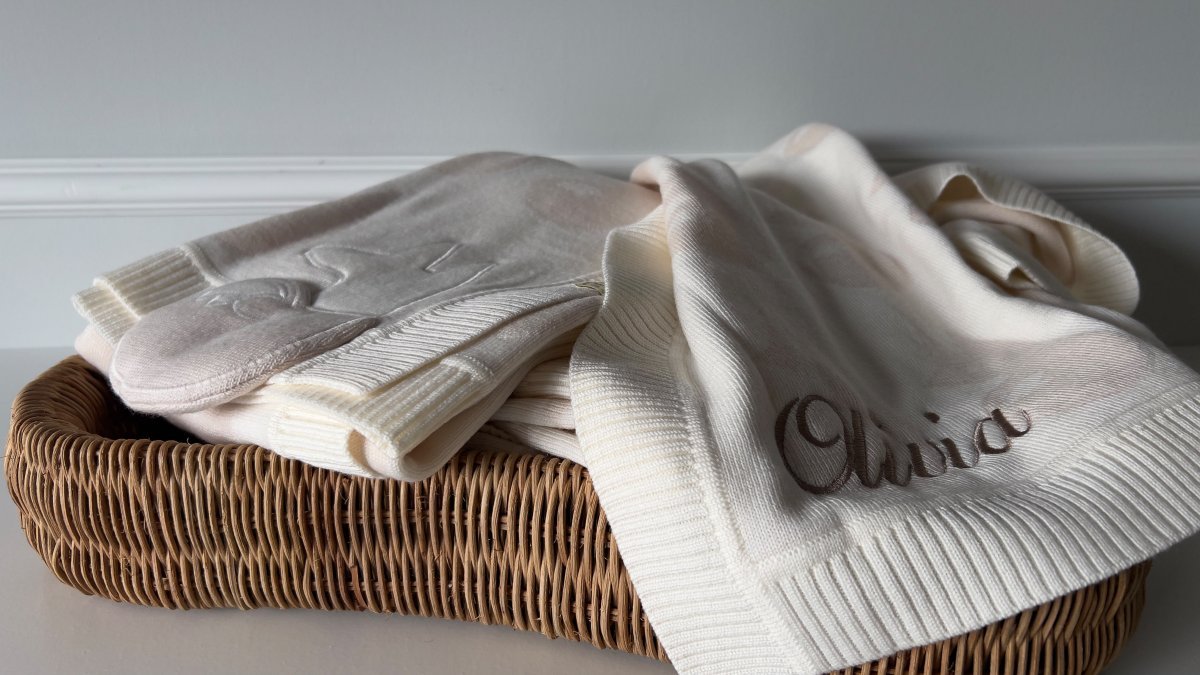
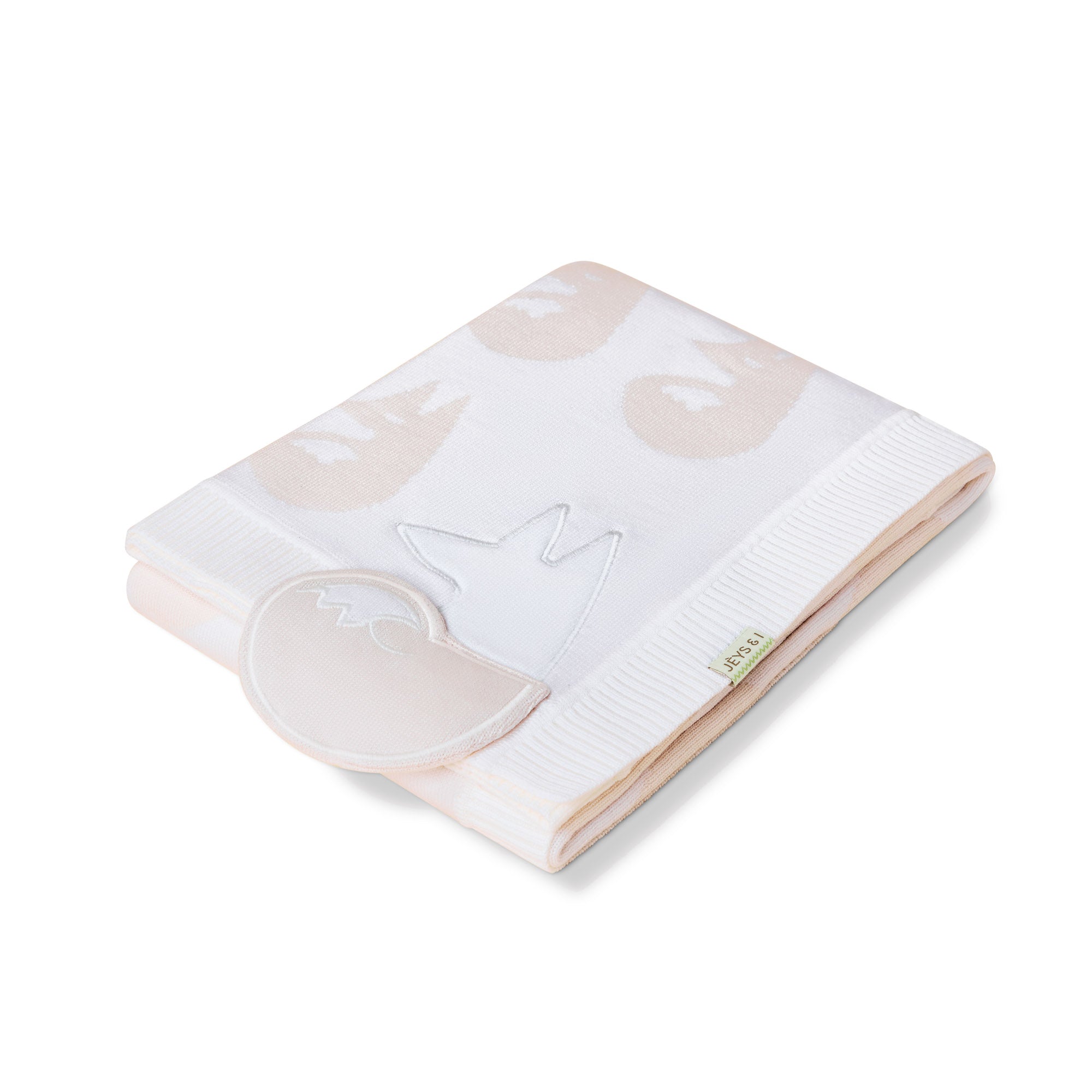
The Signature Jacquard Merino Wool Baby Blanket in cream is one example. It is made from 100% extrafine merino wool with a double-layer jacquard knit, and it features a softly padded fox appliqué with a delicate crinkle detail. You can explore it here: Signature Jacquard Merino Wool Baby Blanket - Cream.
For more on why a plush, soft companion can appeal to babies, see Why Choose A Plush Companion For Your Baby.
How Tactile Development Shapes Sensory Comfort
Touch is the earliest sense to mature, and it stays closely tied to how a baby feels settled or unsettled. Understanding the sequence helps parents read their baby's responses with more confidence rather than treating every reaction as a like or dislike.
A useful way to think about it is in three overlapping stages:
- Early reflex responses. In the first weeks, a baby's reactions to touch are largely automatic. A light stroke may prompt a startle, a grasp or a turn of the head. These are not preferences yet; they are the nervous system beginning to register and sort sensation.
- Discrimination and exploration. Over the following months, babies become more deliberate. They pat, rake, grasp and bring fabrics to the mouth. This is how they begin to tell a smooth muslin from a ribbed knit, and why a surface with a little variation can hold attention longer than a flat one.
- Integration with comfort and routine. As touch, movement and settling become linked, familiar textures start to carry meaning. A particular blanket becomes associated with rest because it has been part of that routine repeatedly, not because the fabric is inherently soothing.
This is why the same baby can seem to love a textured blanket at one moment and push it away the next. Temperature, tiredness, hunger and fit all feed into the same sensory picture. A reaction is a snapshot, not a verdict.
Many parents find that consistent, predictable textures are simpler to live with than a constant stream of new ones. Rotating a small number of familiar pieces can make it easier to spot a genuine pattern.
It also helps to separate typical variation from something that may need a second look. Many babies are simply more sensitive to seams, labels or a scratchy finish, and grow out of it. Persistent distress, repeated skin reactions or a baby who seems uncomfortable across many types of fabric is different, and worth raising with your health visitor or GP. NHS guidance on child development and early years
A sensory-friendly approach to the nursery can support this learning. Is a Sensory Friendly Nursery Worth It? explores how thoughtful textures fit into everyday spaces.
Soft Fabrics for Babies With Sensitive Skin
Babies with sensitive skin often do best with soft, breathable fabrics. Natural fibres such as merino wool and muslin are often chosen for their gentle feel. For a closer look at natural options, Best Organic Fabrics For Newborn Blankets compares several choices.
If your baby's skin seems irritated, speak to your health visitor or GP for advice.
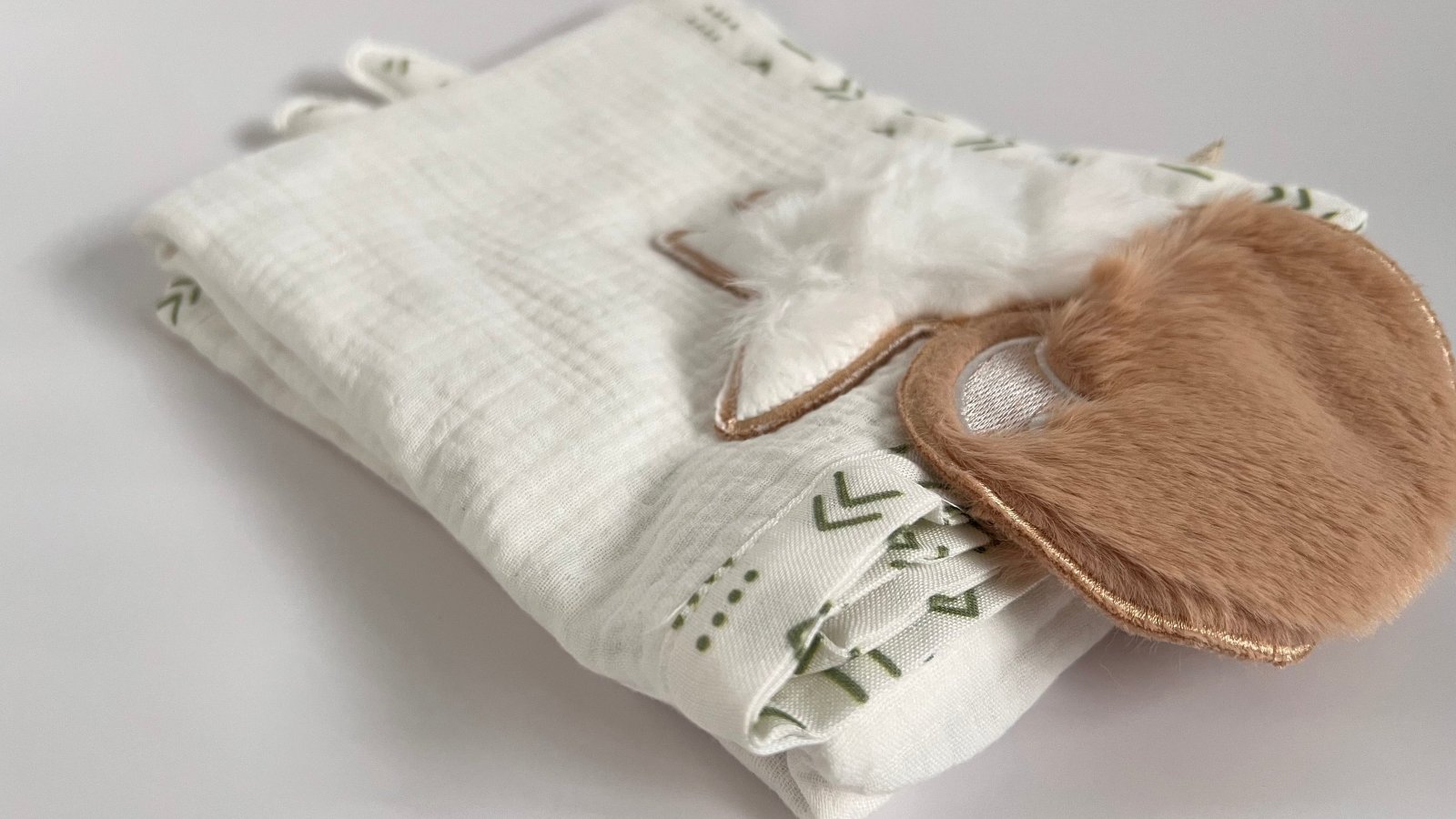
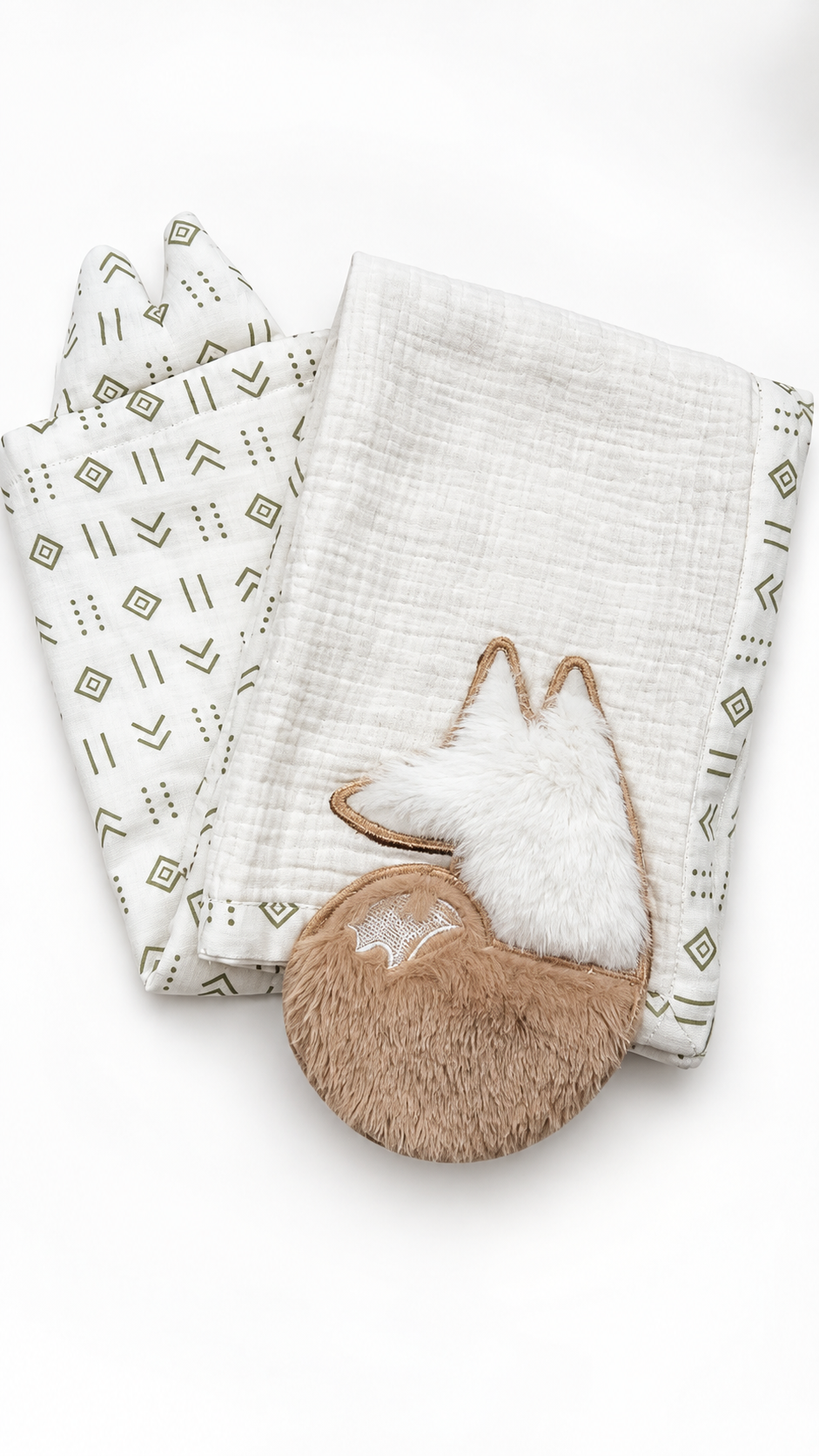
Lightweight pieces can also suit everyday use. The Signature Etelvina Baby Muslin Square is lightweight and breathable, and it is designed as a companion for feeding, burping and pram outings. Signature Etelvina Baby Muslin Square is available from JÈYS & I.
Comparing Fabric Textures for Everyday Use
No single fabric suits every baby, and the useful question is not which is 'best' but which properties matter for a given moment. The table below compares common characteristics rather than declaring a winner.
| Fabric type | Feel | Breathability | Stretch | Seams and finish | Washability |
|---|---|---|---|---|---|
| Cotton muslin | Light, slightly textured | High | Low to moderate | Usually flat, simple seams | Machine washable, dries quickly |
| Knitted merino wool | Soft, warm, gently textured | Moderate to high | Good natural stretch | Often seamless or flat-locked | Hand or gentle machine wash, reshape to dry |
| Jacquard knit | Patterned, raised surface | Moderate | Moderate | Pattern can add bulk at edges | Gentle wash, check label |
| Brushed or fleece-lined | Very soft, smooth | Lower | High | Bulkier seams possible | Washable, can pill over time |
A few properties are worth checking before anything else:
- Weight. A heavier fabric can feel comforting for wrapping but may be too warm for a heated room. Lighter weights suit layering and warmer months.
- Stretch. Some give helps a fabric move with a baby rather than pulling tight across the shoulders or tummy.
- Seams and labels. Flat seams and printed rather than sewn-in labels are a common starting point for babies who react to texture. A seam that sits under the arm or across the back is often the real culprit, not the fabric itself.
- Washability. Babies produce a lot of laundry, so a fabric that washes easily and keeps its shape is often more practical for daily use.
A fabric described as soft can still have a scratchy care label or a stiff seam, so it is worth checking the inside of a piece as well as the outside.
Care instructions vary by product, so always check the label before washing. Choosing a few versatile pieces often works better than buying one of everything.
Signs a Baby Dislikes a Fabric Texture
Babies cannot tell us directly when a fabric feels wrong, but their behaviour often gives clues. Parents who watch closely can usually spot patterns over a few days.
Common signs include:
- Turning away or pulling the fabric off
- Fussing or crying when laid on a particular surface
- Stiffening the body or arching the back
- Scratching at skin where the fabric touches
- Settling quickly once the fabric is removed
Remember that babies go through phases. A reaction on one day does not always mean a fabric is unsuitable. If you notice persistent redness, rashes or distress, contact your GP or health visitor.
Choosing a Gentle Sensory Blanket for Your Little One
A good sensory blanket is soft, breathable and simple to care for. Look for natural fibres, a gentle finish and a size that suits your baby's sleeping and play needs. The Signature Jacquard Merino Wool Baby Blanket in cream is a thoughtful option for parents who want a textured, gentle piece for everyday comfort. Signature Jacquard Merino Wool Baby Blanket - Cream is priced at £71.00.
For more guidance on choosing the right blanket, see Choosing Perfect Merino Wool Baby Blanket.
Every baby explores the world through touch in their own way. JÈYS & I creates premium baby essentials with soft textures and thoughtful details, so parents and gift-givers can choose pieces that feel gentle and beautifully made. Explore the collection to find a soft, timeless addition for your little one's everyday moments.
Frequently Asked Questions
Why do babies like touching textured fabrics?
Babies learn about the world largely through touch, and textured fabrics give them varied tactile input to explore. Ridges, knits and soft fibres create different sensations that hold attention and encourage hand movements. Many babies enjoy these experiences during supervised play, and the reaction a baby shows is the best guide to what they find pleasant. Every baby responds differently, so watch their cues rather than assuming a single preference.
How can I tell if my baby finds a fabric comforting?
A baby who finds a fabric comforting often relaxes their hands, stays still, or keeps touching the material. Look for soft facial expressions, steady breathing and a willingness to stay in contact with the fabric. Calm, settled behaviour after contact is a useful sign. If you notice repeated distress, pulling away or unsettled behaviour, the fabric may not suit your baby at that time. Try again later with a different texture and note what works.
What should I look for when choosing a soft blanket for sensitive skin?
Choose a blanket with a smooth, well-finished edge and a fibre you already know your baby tolerates. Check the care label and wash the blanket before first use. The Signature Jacquard Merino Wool Baby Blanket from JÈYS & I, priced at £71.00, is made from 100% extrafine merino wool and has a double-layer jacquard knit that offers gentle warmth and breathability. Always watch your baby's skin for redness after first use and speak to your health visitor or GP if you have concerns.